
Our technology empowers organizations worldwide to build smarter, safer, and more efficient operations through next-generation connectivity.

Dedicated 5G NR infrastructure for enterprise campuses, smart factories, ports, and mining operations. Ultra-reliable low-latency connectivity for mission-critical applications including AGV coordination, real-time quality inspection, and remote equipment control.
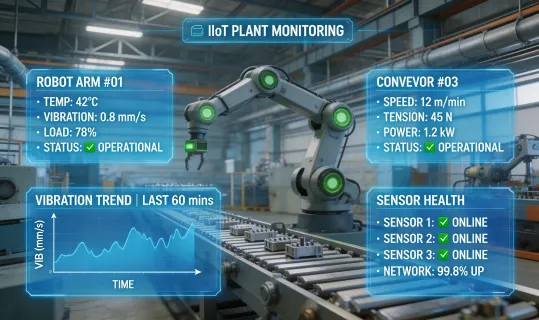
Comprehensive sensor-to-cloud IoT solutions for predictive maintenance, asset tracking, environmental monitoring, and production line optimization in Industry 4.0 environments.

Connected urban infrastructure spanning intelligent lighting, air quality monitoring, traffic flow optimization, waste management, and public safety surveillance powered by LoRaWAN and 5G.
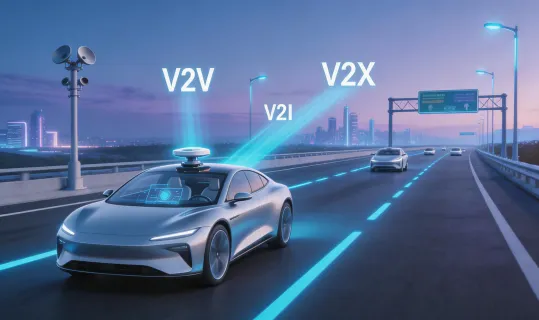
Vehicle-to-everything communication modules and roadside units enabling cooperative driving, fleet management, and intelligent transportation systems with sub-10ms latency.
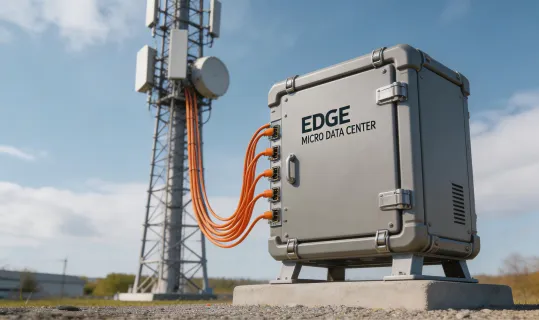
Multi-access edge computing platforms co-located with 5G infrastructure, delivering ultra-low latency processing for AR/VR, gaming, industrial automation, and AI inference at the network edge.

NTN-capable modules and gateways for seamless connectivity in maritime, aviation, remote agriculture, and disaster recovery scenarios where terrestrial networks are unavailable.
Wireless technology has inherent constraints that must be factored into project planning.
5G NR mmWave (FR2) signals attenuate significantly beyond 200-300 meters in outdoor environments and do not penetrate concrete or metal structures. Sub-6 GHz (FR1) provides better penetration but lower peak throughput. Dense urban deployments may require cell spacing of 100-250 meters for mmWave coverage continuity.
Standard wireless modules operate within -40 to +85 degrees Celsius. Deployments in extreme industrial environments (foundries, cryogenic facilities) require specialized enclosures. Humidity above 95% RH may degrade antenna performance over extended periods without IP67-rated housing.
Private 5G network deployments require spectrum allocation that varies by jurisdiction — CBRS (3.5 GHz) in the US, local licensing in Germany (3.7-3.8 GHz), or shared spectrum models in Japan. Regulatory approval timelines range from 4-16 weeks depending on the region, which must be incorporated into project schedules.
Our applications engineering team will design a connectivity solution tailored to your industry requirements.
Talk to an Industry Expert View Solutions